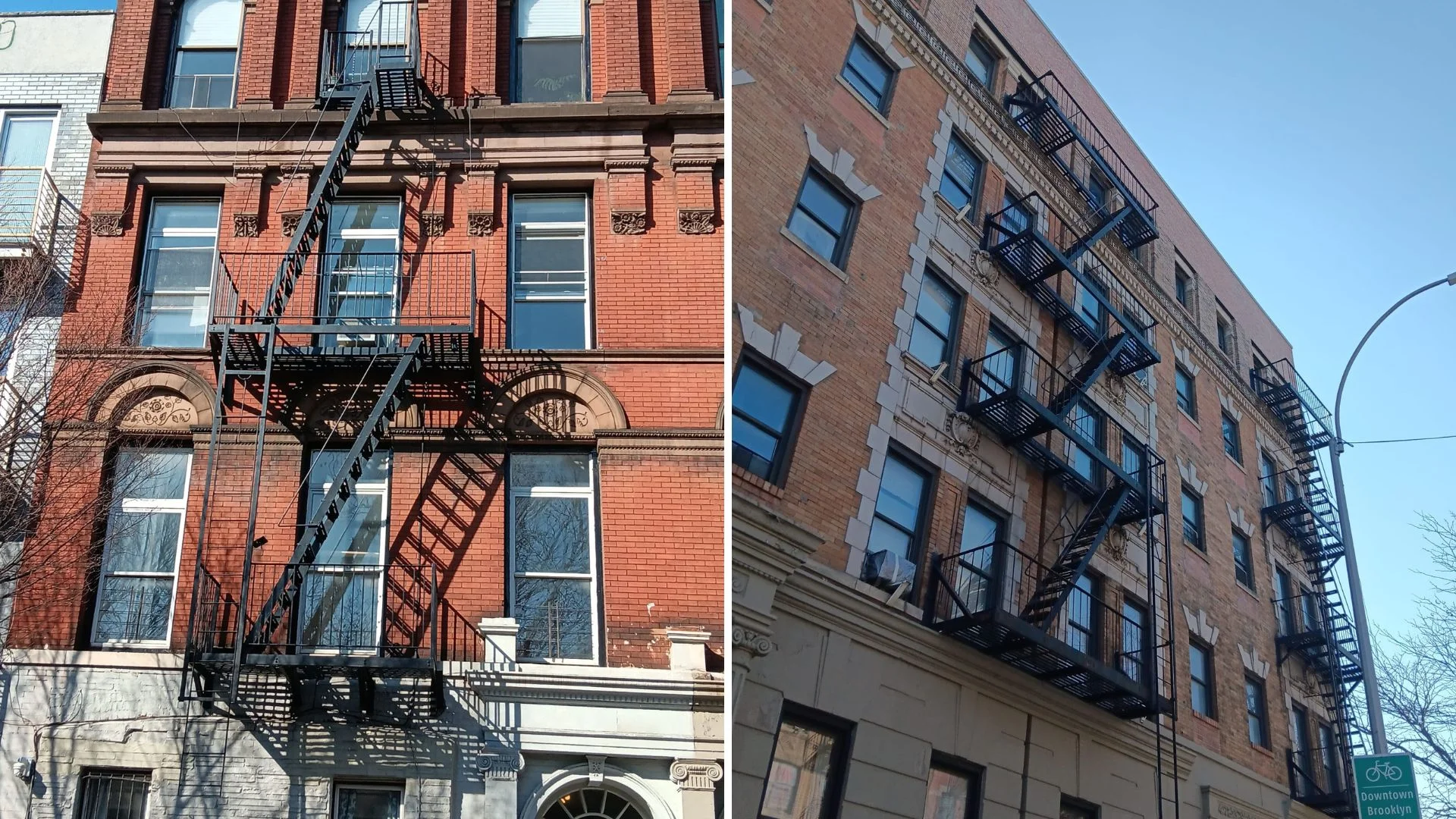
Bronx fire escape
painting and repair
Redevelopment has transformed much of Mott Haven, but many of its residential and mixed-use buildings still rely on original exterior ironwork installed decades ago. These systems face constant exposure to moisture, road salt, pollution, and New York's freeze-thaw cycles. Bronx Fire Escape Painting and Repair helps owners, developers, and property managers preserve aging steel with practical solutions. Whether you're restoring a pre-war walk-up or modernizing an investment property, every project begins with understanding the structure.
Schedule A Site Assessment And Receive A Detailed Scope Before Work Begins Mott Haven Jurisdictional Compliance Alert Restoring exterior structural steel in the South Bronx requires navigating overlapping municipal agencies. Because vast swathes of this neighborhood sit within the Mott Haven Historic District and the Mott Haven East Historic District. Any scraping, torch operations, structural ironwork replacement, or structural coating color shifts legally require a Certificate of No Effect (CNE) or a Permit for Minor Work (PMW) from the NYC Landmarks Preservation Commission (LPC) before any DOB work permits can be approved. Executing unpermitted repairs or shifting to non-approved historic paint colors will trigger immediate LPC stop-work orders and compounding Environmental Control Board fines.
Many neighborhood buildings date back to the late 19th and early 20th centuries. Unlike modern steel assemblies, older installations often include riveted connections, heavy rolled sections, and multiple generations of repairs. They require a different approach.
Older properties may also contain lead-based coatings, requiring renovation work to comply with the EPA’s Renovation, Repair and Painting (RRP) Rule. According to the NYC Department of City Planning, much of the South Bronx housing stock predates World War II, making proactive preservation an essential part.
The pre-war multi-family walkups along Alexander Avenue, Willis Avenue, and the historic Bertine Block on East 136th Street feature structural egress configurations built with true 19th-century structural wrought iron and non-ductile cast-iron support brackets, rather than modern carbon steel.
Aging metallic systems cannot tolerate standard high-heat commercial welding loops or aggressive grinding wheels.
No two buildings age the same way, but several issues appear repeatedly during field evaluations.
The American Galvanizers Association notes that corrosion often begins in areas where protective coatings have been damaged, or moisture remains trapped for extended periods.
Protective coatings are the first line of defense against corrosion, but only when surface preparation is done correctly. We remove failing finishes and apply high-performance coating systems suitable for New York's demanding climate.
Every evaluation focuses on the condition of structural members, anchors, connections, welds, platforms, and coatings. Detailed findings help owners prioritize repairs before deterioration spreads or compliance concerns arise.
Localized damage doesn't always require replacement. We repair deteriorated railings, treads, brackets, and other steel components using methods appropriate for the existing structure while minimizing disruption to occupants.
Older assemblies frequently develop fatigue cracks around high-stress connections. Qualified welding repairs restore structural integrity after proper assessment using procedures consistent with AWS D1.1 Structural Welding Code – Steel, the industry's widely recognized benchmark.
Although these systems are separate from façade inspections, deteriorated exterior steel is often identified during broader building condition assessments under the Facade Inspection & Safety Program (FISP), formerly Local Law 11.
Keeping inspection records, documenting repairs, and addressing corrosion promptly demonstrates responsible maintenance and helps simplify future property evaluations.
During construction or repair activities, worker protection must also follow applicable OSHA 29 CFR 1926 requirements covering fall protection, access equipment, and safe work practices.
Is Your Mott Haven Facade Rated SWARMP or Unsafe?
Prevent your structural egress system from triggering thousands of dollars in automated monthly city fines. Schedule a certified close-up balcony pre-inspection before your official QEWI drop date.
Proximity to the Harlem River exposes nearby properties to elevated humidity year-round. In Mott Haven, this moisture mixes with dense, aggressive soot from the Major Deegan and Bruckner Expressway interchanges, creating a highly corrosive film on exposed ironwork.
If your building sits near the active industrial blocks of Lower Concourse or along the quieter residential rows of the Bertine Block, winter de-icing salts and constant freeze-thaw cycles trap acidic moisture beneath failing layers of paint.
Routine Maintenance = Structural Preservation Designed To Withstand the South Bronx’s Unique Micro-climate
Older buildings deserve thoughtful planning, not one-size-fits-all solutions. Here’s why our clients choose us.
In many cases, yes. Restoration depends on corrosion depth, connection strength, and the overall condition of the steel. A detailed assessment determines whether repairs or replacement are the safest solution.
High humidity, winter road salt, air pollution, and New York's freeze-thaw cycles accelerate coating failure and corrosion, especially on older buildings with deferred maintenance.
Yes. Most projects are carefully planned to minimize disruption to residents while maintaining safe access and complying with applicable OSHA and NYC safety requirements.
Yes. Many properties built before 1978 may contain lead-based coatings. When present, work should follow the EPA Renovation, Repair and Painting (RRP) Rule to help protect occupants and the surrounding environment.
Annual visual inspections are recommended, with a more detailed evaluation whenever rust, loose connections, cracked welds, or peeling coatings are observed.
Historic buildings are among New York City’s greatest assets, but they demand informed maintenance. If you’re restoring a landmark investment or preparing for redevelopment, our experienced team delivers durable solutions that help preserve your property’s long-term value.
Stuck in Due Diligence or Refinancing with an Open BIS Registry Mark?
An ironworker’s invoice cannot clear an open city citation. Our engineering partners review old structural repairs, run the mandatory load math, and file the formal portal documentation to clear your property title.
painting and repair